For parents · What to say when...
What to say when your child is disappointed

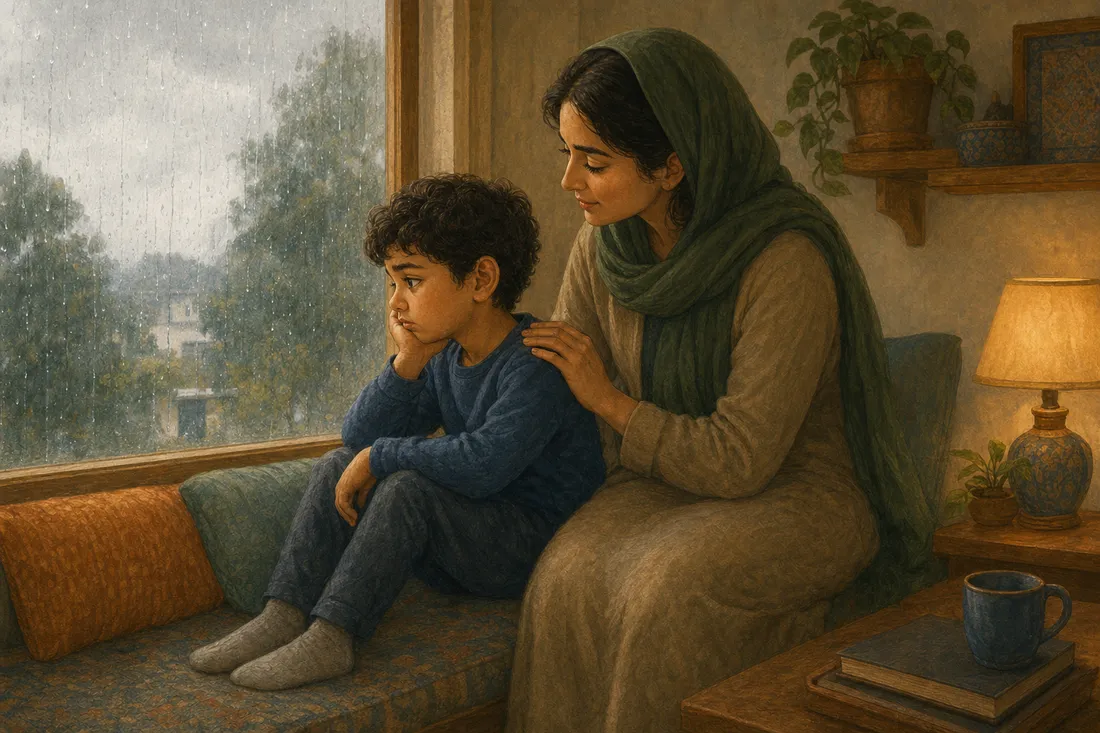
Short answer: Name the disappointment out loud before you reach for a fix ("You really wanted that, and it didn't happen"). Then, once they've settled, help them find the part that's still theirs to try or enjoy. Skip "it doesn't matter", because it did matter, and being understood is what helps.
Disappointment is one of the first heavy feelings a child meets. The party got cancelled, the tower fell, they tried their best in the race and still came last. It stings, and a small person doesn’t yet have the words for it.
From the Stoics
Do not require things to happen as you wish, but wish them to happen as they do, and you will go on well.
What to say in the moment
Lead with understanding, not repair.
- Name it: “You really wanted that, and now it’s not happening. That’s so disappointing.”
- Let it be true: resist “it’s fine” or “it doesn’t matter.” It wasn’t fine to them, and it did matter. Being told otherwise just adds “and nobody gets it” to the pile.
- Stay close and calm: you don’t have to fix the feeling. You have to be steady beside it while it passes.
What to avoid
“At least…” rarely helps in the hot moment (“at least you got a medal for taking part”). It asks a child to feel grateful before they’ve finished feeling sad. There’s room for perspective later, once the wave has gone through.
The idea underneath
There’s a Stoic image that fits disappointment perfectly. An archer does everything in their power to aim well: to stand, to draw, to release with care. But once the arrow is in the air, the wind belongs to the world. We don’t say the archer failed when the wind moved the arrow. We say they aimed well.
For a child, that separates two things that usually get tangled: the effort, which was theirs, and the outcome, which wasn’t fully. They can be proud of a good try even when the result went another way. Their worth was never riding on the result.
The words to keep
When things are calm, a short phrase gives them something to hold next time:
“Take care of your aim. The wind is not yours.”
That’s the whole of The Archer, a Stoic Sprout story about exactly this. And when a plan falls apart rather than a result, The Rainy Picnic helps a child find the part that’s still theirs to enjoy.
The story for this
The ArcherFree to try
“Take care of your aim.”
Even when the wind moves the arrow, you can still aim well. A gentle look at trying your best when the result is out of your hands.
Hear the story → Mark made Stoic Sprout as a dad in Melbourne, for his own young children, with calm stories drawn from the real Stoic philosophers. More about Mark →
Small stories for big feelings.
Calm tales from the real Stoic philosophers, with a phrase your child can keep. A few are free to try.